
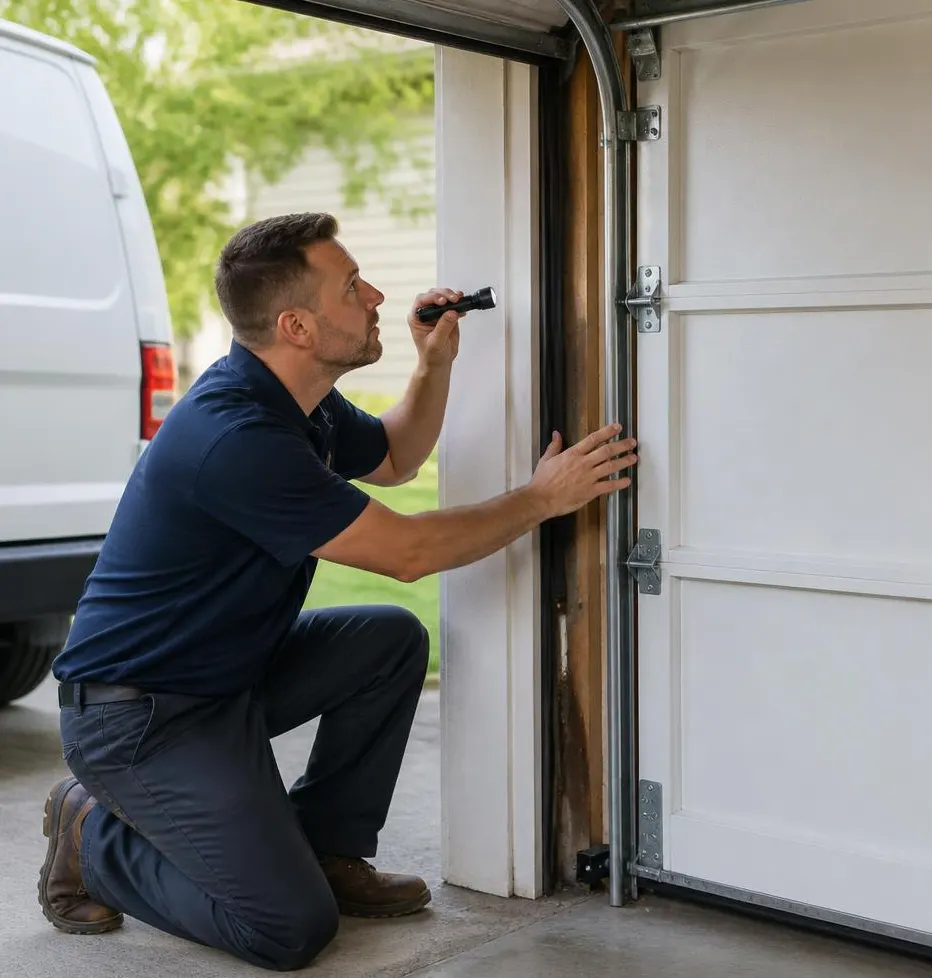
If the job involves a torsion or extension spring under tension, don't do it yourself — call a trained technician. Almost everything else on a garage door, from lubricating hinges to swapping weatherstripping, is fair game for a confident homeowner. Springs are the one exception that routinely lands people in the emergency room, and it's worth understanding exactly why.
What a Garage Door Spring Actually Does
A standard residential garage door weighs 130 to 400 pounds. The springs — usually one or two torsion springs mounted above the door, or a pair of extension springs along the upper tracks — do almost all the work of lifting that weight. To do that, they're wound or stretched to hold an enormous amount of stored energy, roughly equivalent to the force of a car bumper moving at several miles per hour. That energy is always present, whether the door is open or closed, until the spring is deliberately and carefully unwound.
This is different from most things homeowners fix. A leaky faucet doesn't fight back. A spring does.
How Badly This Goes Wrong
When a torsion spring is wound or unwound with the wrong tools — or the wrong technique — it can unload all at once. Winding bars that slip, springs that aren't properly secured, or attempts to improvise with screwdrivers or pliers instead of proper winding bars are the most common triggers. The results we hear about from ER visits and insurance claims include:
- Fractured fingers, wrists, and forearms from a spring or bar recoiling
- Facial lacerations and eye injuries from flying metal fragments
- Deep cuts from the sharp, broken ends of a failed spring
- Crush injuries when a door drops unexpectedly because the spring was disconnected without the door being secured first
None of this requires a dramatic mistake. A spring that's rusted from winter rain or salted coastal air can fail in a way that looks stable right up until it isn't.
Warning Signs Your Springs Need Attention
You don't need to inspect the spring itself to know something's wrong. Watch for:
- The door feels noticeably heavier when lifted manually
- A loud bang from the garage — often the sound of a spring snapping
- The door opens unevenly or looks crooked in the track
- Visible gaps or separation in the coils of the spring
- The opener strains, stalls, or reverses on its own
Coastal humidity and salt air accelerate corrosion on exposed hardware, and homes near the water often see spring and cable wear faster than those further inland. Dry seasons bring their own issue: dust and grit work into the coils and bearings, adding friction that puts extra load on an already-stressed spring.
What You Can Safely Do Yourself
Plenty of garage door maintenance is genuinely low-risk and worth doing:
- Lubricating hinges, rollers, and the spring itself with a garage-door-specific lubricant twice a year
- Replacing worn weatherstripping at the bottom of the door
- Tightening visible bolts on tracks and brackets (with the door closed and opener unplugged)
- Testing the auto-reverse safety feature by placing a block of wood in the door's path
- Visually checking cables and springs for rust, fraying, or gaps without touching them
If any of that inspection turns up a problem with the spring itself, that's your line. Step back and call it in.
When to Call Long Beach Overhead Door Co
If you've noticed a heavier door, a loud bang, uneven movement, or visible spring damage, that's a spring replacement call, not a weekend project. Our technicians arrive with the right winding bars, clamps, and training to unwind and replace torsion or extension springs safely, and we'll check the cables, drums, and bearings at the same time since they wear together. If your opener has been straining to compensate for a weak spring, we can also handle opener repair or replacement in the same visit so the whole system is back in balance.
Garage door springs don't give much warning before they let go, and the house conditions here — salt air, seasonal dust, and winter rain — all speed up that wear. If your door feels off, give Long Beach Overhead Door Co a call. We serve Long Beach, Lakewood, Signal Hill, Carson, Compton, Paramount, Bellflower, and Wilmington, and we'll get your door running safely again.